
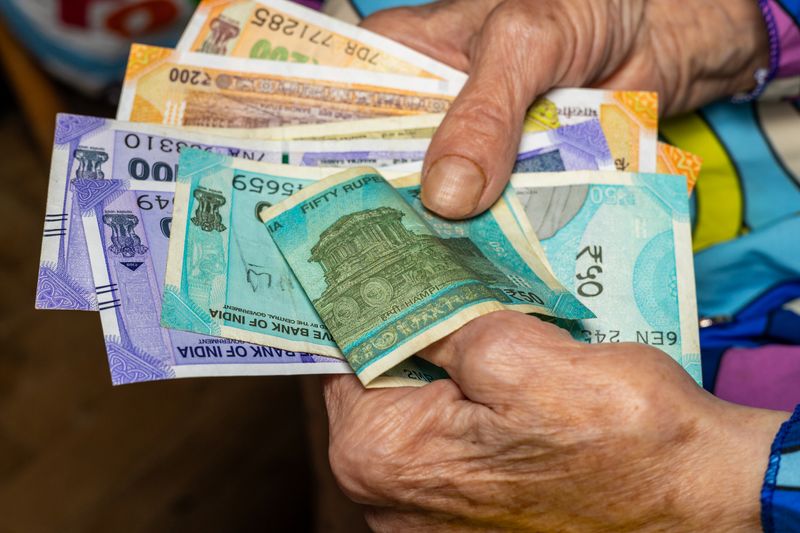
The rupee fell 52 paise to settle at 93.35 against the US dollar on Monday, as tensions in West Asia were exacerbated by failed US-Iran peace negotiations, which raised the price of crude oil, and sparked a global drive for the US dollar.
Forex specialists suggest that the uncertainty surrounding the opening of the Strait of Hormuz in the wake of the US announcement to block Iranian ports increased foreign capital withdrawals from domestic equities, devaluing the Indian currency.
Meanwhile, benchmark indices ended the session lower. Rising geopolitical tensions, along with a sharp increase in crude oil prices, led to a gap-down opening, pulling the Nifty below the 23,600 mark.
At close, the Sensex had declined by 702.68 points, or 0.91 per cent, to settle at 76,847.57, while the Nifty fell 207.95 points, or 0.86 per cent, to end at 23,842.65.
Sector-wise, the weakness was widespread, with all major sectors finishing in the red. Nifty Auto, Oil & Gas, and FMCG stocks saw the steepest declines, reflecting the lack of sectoral support during the session, according to Bajaj Broking Market Commentary.
The absence of defensive buying further weighed on the markets, although most sectoral indices managed to recover a significant portion of their intraday losses.
Siddhartha Khemka, head of research (wealth management), Motilal Oswal Financial Services Ltd, said Indian markets were likely to remain volatile in the near term, with limited scope for relief until meaningful progress was seen in the West Asia conflict. He said the absence of an agreement had led to a sharp rise in crude oil prices and a weakening rupee, which could keep foreign fund flows under pressure.
Additionally, the ongoing earnings season was expected to add to market volatility, keeping sentiment cautious.
“Overall, market sentiment remains fragile amid escalating geopolitical tensions, elevated crude oil prices and persistent volatility. While intermittent recoveries may emerge on value buying, the broader trend is likely to stay cautious, with near-term direction dependent on developments in the West Asia conflict, movement in energy prices, and foreign fund flow trends,” Khemka added.
