
India’s gross domestic product (GDP) growth estimate has been raised to 7.6 per cent for the current fiscal from 7.4 per cent after the government revised the calculation methodology, including change in base year and adding data from GST and e-Vahan portal, to better reflect economic activities.
The GDP in the October-December quarter of 2025-26 grew by 7.8 per cent, up from 7.4 per cent in the year-ago period, mainly driven by the manufacturing and services sectors.
The Ministry of Statistics and Programme Implementation (MoSPI) released the New Series of Annual and Quarterly National Accounts Estimates with base year 2022-23, replacing the previous series with base year of 2011-12. This is the ninth base revision of the GDP series.
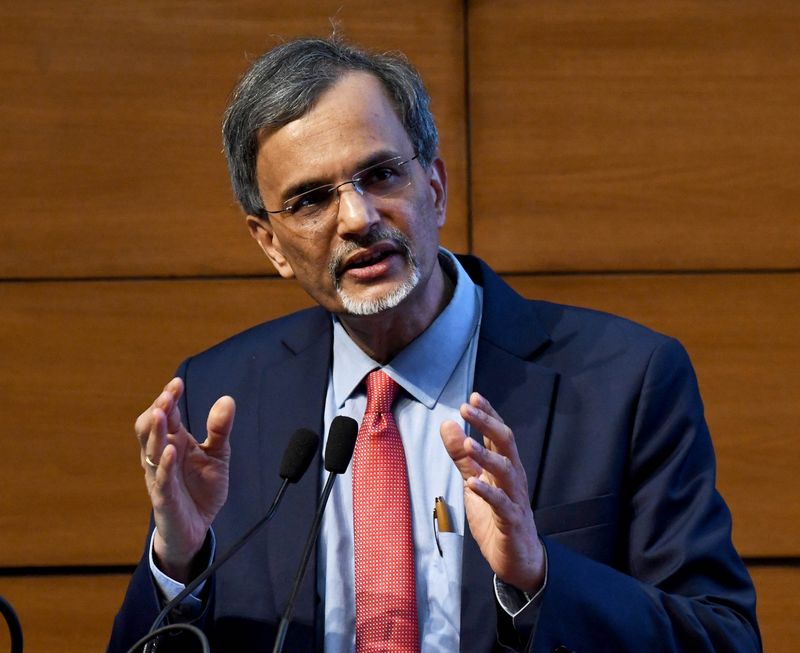
Chief Economic Adviser V Anantha Nageswaran said India was set to cross the $4 trillion GDP mark in 2026-27, indicating that the broader fiscal activity continued to sustain the country’s economic robust growth rate. The economic growth forecast for the upcoming fiscal year had been raised by 20 basis points to 7-7.4 percent in light of the newly released GDP figure, he said.
According to the new series, the growth for the second quarter has been revised upwards to 8.4 per cent from 8.2 per cent in the old series (base: 2011-12), while for the first quarter, it has been lowered to 6.7 per cent from 7.8 per cent.
“The growth rate in Real GDP during 2025-26 is estimated at 7.6 per cent as compared to 7.1 per cent in 2024-25,” MoSPI said. Speaking at the media briefing, Nageswaran said vital components showed that India could continue to expand at a rate of about 7.6 percent on its current course. He pointed out that per capita real income growth had averaged roughly 6.8 per cent in previous years, while per capita nominal GDP growth might reach 9 per cent.
Nageswaran noted that investment and consumption would continue to be important economic engines in FY27. “Particularly among the G20 nations, the growth rate since COVID-19 has likely been among the best, if not the best, in the world,” he said.
However, a number of other factors such as the exchange rate would also affect whether or not a specific relative position was attained, which did not work out well for India in 2025. “That would inevitably have an effect,” he added.
He further said the private sector investment in machinery and equipment had increased in 2024-25, adding that the capex-to-GDP ratio and the other metrics would predominantly not change.
Nageswaran added that India’s exports to the US and the EU would result in improved export growth in 2026-2027.
