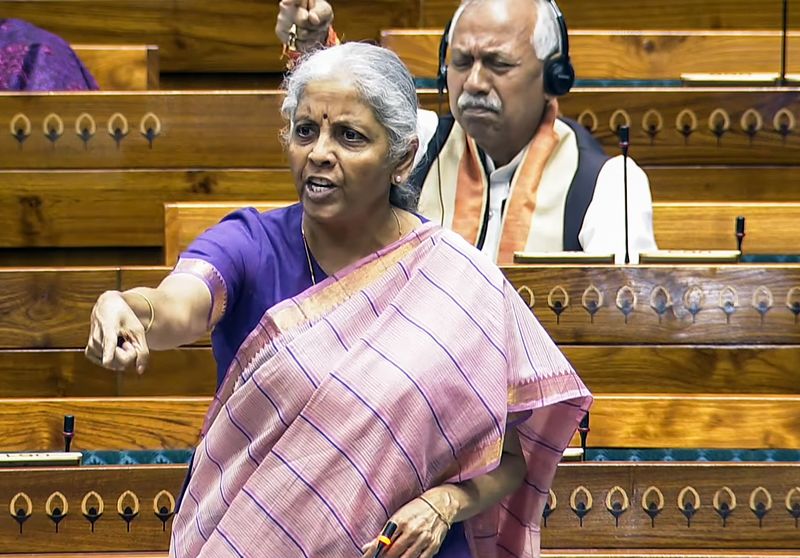
The Lok Sabha on Monday passed the Insolvency and Bankruptcy Code (Amendment) Bill, 2025, seeking to amend the Insolvency and Bankruptcy Code (IBC), 2016, to further streamline insolvency resolution processes and address gaps in the existing law.
The Lower House had taken up the Bill, moved by Finance Minister Nirmala Sitharaman, for discussion on March 27. Initially referred to a select committee, the Bill aims to address delays and introduce procedural changes in insolvency and bankruptcy proceedings for companies and individuals.
Featuring 12 amendments, the revised legislation introduces key changes to India’s insolvency framework, including creditor-driven mechanisms, stricter timelines and provisions for group and cross-border insolvency.
Speaking before the Bill was passed, Sitharaman said the amendments provide enabling provisions for group and cross-border insolvency processes. She added that more than half of banks’ non-performing assets (NPAs) have been recovered through the IBC framework.
“As of December 2025, the IBC has facilitated the resolution of 1,376 companies, enabling creditors to recover Rs 4.11 lakh crore,” she said.
She emphasised that while the IBC has improved companies’ credit discipline, it was never intended to function merely as a debt recovery tool.
Addressing Opposition concerns over delays, Sitharaman attributed them primarily to prolonged litigation and said the new Bill proposes penalties to curb abuse of the process. The amendments mandate admission of insolvency applications within 14 days once default is established, removing discretionary grounds for rejection and requiring written reasons for delays.
A new creditor-initiated insolvency resolution process (CIIRP) allows specified financial creditors to trigger proceedings against corporate debtors, subject to approval by at least 51 per cent (by value) of creditors. Unlike the standard process, the debtor’s management will continue under the supervision of a resolution professional.
The Bill removes the fast-track insolvency resolution process for small companies and startups, signalling a structural shift in handling smaller entities.
It also empowers the National Company Law Tribunal (NCLT) to convert a creditor-initiated process into the standard Corporate Insolvency Resolution Process (CIRP) under specified conditions, including failure to receive or approve a resolution plan within prescribed timelines.
Further, the Centre has been authorised to frame rules for group insolvency, including provisions for a common NCLT bench, joint committees of creditors and shared resolution professionals.
For the first time, the Bill introduces a framework for cross-border insolvency, enabling cases involving assets or creditors across jurisdictions.
In liquidation cases, the Committee of Creditors (CoC) will be empowered to oversee proceedings and replace the liquidator. The Bill also mandates that liquidation orders be passed within 30 days and completed within 180 days (extendable by 90 days), while voluntary liquidation must conclude within a year.
To deter misuse, the Bill introduces penalties ranging from Rs 1 lakh to Rs 2 crore for filing frivolous or vexatious applications.
Enacted in 2016, the IBC consolidated India’s insolvency laws into a single framework aimed at time-bound resolution of stressed assets. The latest amendments seek to improve efficiency, reduce litigation delays, strengthen creditor control and expand the code’s scope to include emerging areas such as group and cross-border insolvency.